Seasonal Renewal: Why Your Skin Needs a Spring Cleaning

How to transition your skin care from winter to spring — and why this season matters more than you think
Every spring, most of us feel that familiar pull to open windows, clear out closets, and start fresh. We call it spring cleaning for a reason — winter leaves a residue on everything, and our homes are not the only things that need a reset.
Your skin has been through a lot these past few months. Dry indoor heat. Cold wind. Heavy moisturizers. Less sunlight. Layers of clothing that trap sweat and bacteria. And through all of it, your skin has been quietly working — protecting you, repairing itself overnight, and doing its best with what it had.
But now the seasons are shifting. And what worked for your skin in January is not necessarily what it needs in March. Understanding why — and knowing how to respond — is the difference between skin that struggles through the seasonal transition and skin that blooms alongside the flowers.
Let me walk you through exactly what is happening to your skin right now, and what you can do about it.
| “Your skin is not the same in March as it was in January. It should not be treated that way either.” |
What Winter Actually Does to Your Skin
To understand why spring is such an important transition, we first need to talk about what winter does. Most people notice the obvious effects — dryness, tightness, maybe some flakiness around the nose and forehead. But winter affects your skin at a deeper level than most people realize.
The Barrier Takes a Hit
Your skin barrier — the outermost layer responsible for keeping moisture in and irritants out — takes significant damage during winter. Cold temperatures and dry air pull moisture from your skin constantly, while indoor heating reduces humidity even further. Over time this leads to what we call a compromised barrier: skin that is dehydrated, reactive, and struggling to protect itself effectively.
A compromised barrier not only feels uncomfortable, it also allows environmental irritants to penetrate more easily, which can trigger inflammation, sensitivity, and breakouts — even in people who do not normally experience these issues.
Dead Skin Cells Build Up
Your skin naturally sheds dead cells through a process called desquamation. In healthy skin this happens smoothly and consistently. But in winter, the combination of dehydration, reduced circulation from cold temperatures, and the heavier products most of us use creates a buildup of dead skin cells on the surface that our body’s cannot shed on its own.
This is why so many people notice a dullness or lackluster quality to their skin in late winter. It is not just in your head — there is a literal layer of dead skin sitting on the surface, blocking the fresh, healthy cells underneath from showing through.
Your Sebaceous Glands Shift
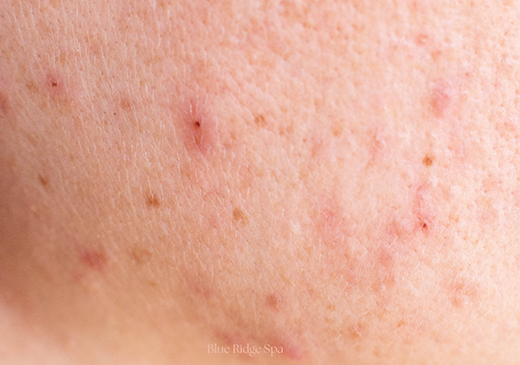
In cold weather your oil glands (Sebaceous glands) tend to slow down, producing less oil than they do in warmer months. For oily and combination skin types this can feel like a welcome break. But for dry and normal skin types it often means that the skin lacks the natural lipids it needs to stay supple and protected. When spring arrives and temperatures rise, those same oil glands can swing in the opposite direction — suddenly producing more oil than your skin is used to, which can lead to congestion and breakouts if your routine has not adjusted.
| Winter Skin — What You Might Be Noticing Right Now A dull, flat, or lackluster complexion that feels heavy Dry patches — especially around the nose, forehead, and chin. Skin that feels tight after cleansing even when you moisturize. Increased sensitivity or redness that was not there in summer. Small bumps under the skin or congestion around the nose and cheeks. Makeup that does not sit smoothly the way it used to |
What Changes When Spring Arrives
Spring is not just a calendar event for your skin — it is a genuine biological shift. As temperatures rise and humidity increases your skin begins to respond to its environment in different ways.
Humidity Returns
One of the most immediate changes your skin notices in spring is the return of moisture to the air. Higher humidity means your skin does not have to work as hard to maintain its water content. For many people this brings welcome relief from winter dryness. But it also means the heavy moisturizers you reached for in January may now be too much — sitting on top of the skin, clogging pores, and contributing to the congestion and breakouts that many people experience in early spring.
This is one of the most common things I see in my treatment room in March and April — clients who have not yet changed their routine and whose skin is suddenly breaking out or feeling congested after months of being fine. The products did not stop working. The season changed and the routine did not change with it.
UV Exposure Increases — Often Before We Notice
Here is something that surprises a lot of people: UV radiation begins increasing significantly in late February and March, well before it feels warm outside. Clouds do not block UV rays, and even a mild spring day can deliver meaningful UV exposure to unprotected skin.
If you have been relaxed about SPF over the winter — and most of us have been, honestly — spring is the time to rebuild that habit. UV damage is cumulative and it is the single largest contributor to premature aging. The good news is that consistent daily SPF is also the single most effective anti-aging investment you can make. It is never too late to start being consistent.
Hormonal Shifts and Seasonal Breakouts
Many people experience an increase in breakouts during seasonal changes, particularly in spring. This is not a coincidence. Your body’s hormonal patterns respond to changes in light exposure — specifically the increase in daylight hours that comes with spring. For some people this hormonal shift triggers increased oil production and congestion just as the skin is also adjusting to rising temperatures and humidity.
If you notice more breakouts in March and April than at other times of year, seasonal hormonal fluctuation combined with a skincare routine that has not changed is very likely a contributing factor.
| “Spring breakouts are often not about what you are doing wrong. They are about a season your skin care routine has not caught up to yet.” |
How to Transition Your Routine from Winter to Spring
The good news is that transitioning your skin care routine for spring does not require buying an entirely new product lineup. It requires understanding what your skin needs now versus what it needed three months ago — and making thoughtful adjustments.
Step One: Lighten Your Moisturizer
If you have been using a rich, thick cream moisturizer through the winter, spring is the time to start using something lighter — a lotion or a gel-cream texture that hydrates without the heavy occlusive quality that worked well in dry winter air. Your skin still needs moisture, but now the air itself is helping with that job. A lighter formula allows your skin to breathe more freely as temperatures rise.
If you are not sure whether your moisturizer is too heavy for spring, pay attention to how your skin feels by midday. If it looks shiny or feels congested even though you are cleansing properly, your moisturizer is likely contributing.
Step Two: Gently Reintroduce Exfoliation
Gently increasing your exfoliation in spring is one of the most impactful things you can do for your skin right now. That buildup of dead skin cells from winter needs to be addressed — but the key word is gently. If your barrier has been compromised by winter, aggressive exfoliation will cause more harm than good.
A gentle chemical exfoliant — something with a low concentration of lactic acid or mandelic acid — used once or twice a week is a beautiful way to begin clearing that winter accumulation without disrupting your barrier. Physical scrubs are generally too aggressive for this transition period, particularly for sensitive or reactive skin types.
If you are not currently exfoliating at all, start with once a week and see how your skin responds before increasing frequency.
Step Three: Get Serious About SPF
I say this with complete love and zero judgment: if you do not have a daily SPF habit, spring is your moment to build one. Not a beach SPF, not a once-in-a-while SPF. An every-single-morning SPF, applied as the last step of your morning routine before makeup.
Look for a broad-spectrum SPF 30 or higher with a formula that works for your skin type. Oily and acne-prone skin does beautifully with lightweight, non-comedogenic mineral SPF formulas. Dry skin tends to prefer an SPF with a more hydrating base. If SPF has always felt heavy or greasy on your skin, the formula was likely wrong for your skin type — not the SPF itself.

Step Four: Address What Winter Left Behind
Even with the best at-home routine, there are things your skin accumulates over winter that home care cannot fully address on its own. Congestion in the pores. Deep dehydration in the lower layers of the skin. Uneven texture from dead cell buildup. Post-inflammatory marks from winter breakouts or irritation.
This is where professional treatment makes a real, visible difference. A skilled esthetician can assess the specific state of your skin right now — not generically, but your actual skin, today — and provide a targeted treatment that addresses exactly what it needs to transition well into spring.
Think of it the way you think of a deep spring clean in your home. You can tidy up every day and still benefit enormously from a thorough, professional reset once in a while. Your skin is no different.
| Your Spring Skin Care Transition Checklist: Switch to a lighter moisturizer as temperatures and humidity rise Reintroduce gentle exfoliation one to two times per week Begin daily broad-spectrum SPF 30 or higher every morning Assess whether your cleanser is still right — a gentle hydrating cleanser is usually ideal for spring Drink more water — your skin’s hydration needs shift with the season Consider a professional facial to clear winter buildup and reset your skin’s baseline Pay attention to how your skin responds to seasonal changes and adjust accordingly |
A Note on Western NC Spring Skin
Here in Western North Carolina, spring comes with its own particular set of skin considerations that people in other climates do not always deal with. Our spring is genuinely beautiful — but it is also unpredictable.
We can have a 70-degree day in early March followed by a frost the next morning. The humidity can swing significantly from week to week. And for many of us in Western NC, spring also means seasonal allergies — and the inflammation that comes with them does not stay in your sinuses. It shows up in your skin too, often as increased redness, puffiness, and sensitivity.
If you notice your skin becoming more reactive in spring than at other times of year and you also deal with seasonal allergies, these two things are almost certainly connected. Supporting your skin barrier during this time — keeping it strong, calm, and well-nourished — is the best thing you can do to minimize that reactivity.
Gentle, consistent care wins every time over aggressive treatments during allergy season. This is not the time to try a new active ingredient or push your skin hard. It is the time to strengthen your foundation so your skin can handle what the season brings.
| “In Western NC, spring is a conversation between the weather and your skin. The more you understand that conversation, the better you can support what your skin needs.” |
Your Skin Deserves a Fresh Start
Winter asks a lot of your skin. It asks it to protect you in harsh conditions, to maintain itself with less humidity and less sunlight, to repair itself night after night while you sleep. And your skin does all of that quietly, without complaint.
Spring is your opportunity to say thank you. To give your skin the reset it has earned. To clear away what winter left behind and create a clean, healthy foundation for the months ahead.
Whether that means tweaking your at-home routine, adding a gentle exfoliant, finally committing to daily SPF, or relaxing on a treatment bed for an hour while someone who understands your skin takes care of it — the most important thing is that you do something intentional.
Your skin works hard for you every single day. Spring is the perfect time to work a little harder for it.